
European Credit Transfer and AccumulationSystem
How ECTS Works?
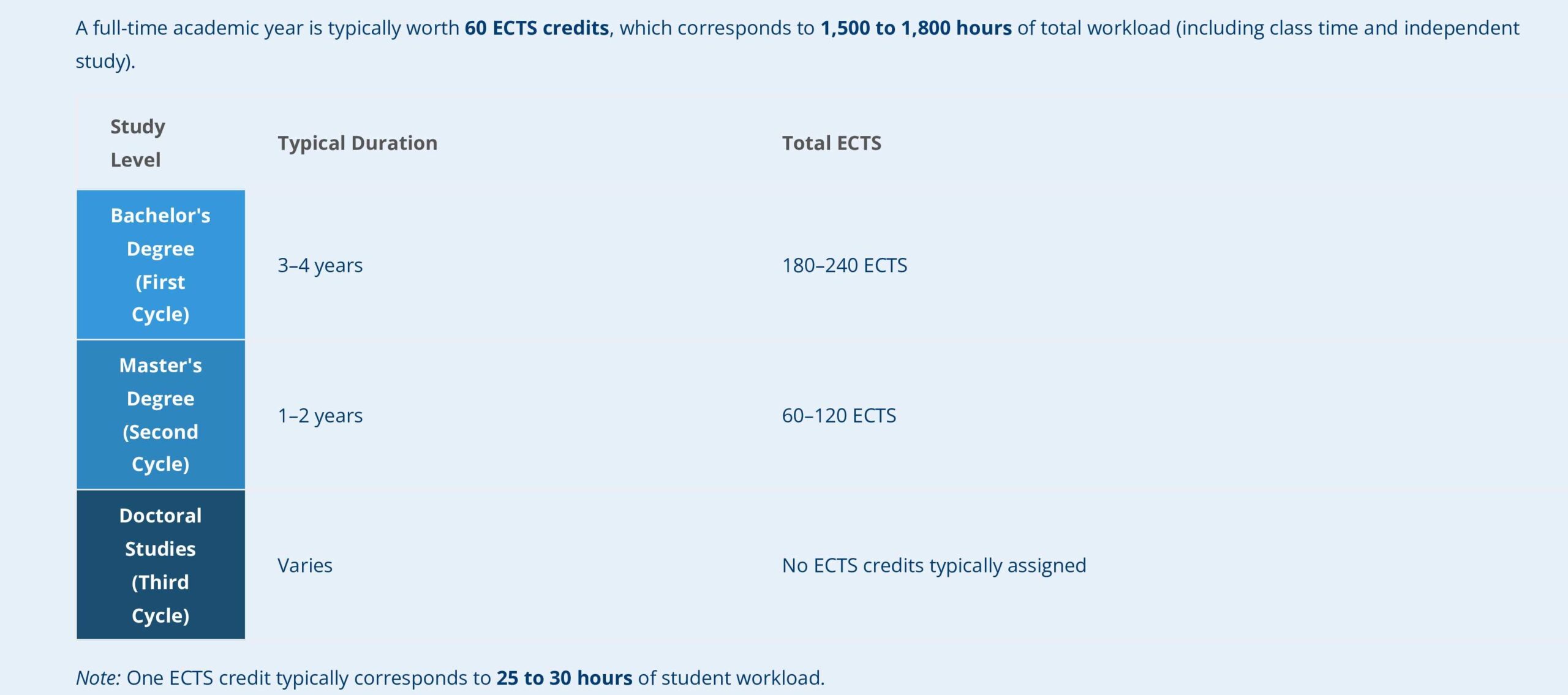
Credit Allocation: ECTS credits are based on the total workload required to achieve specific learning outcomes. Typically, 1 ECTS credit corresponds to 25 to 30 hours of student effort, including lectures, independent study, and assessments. A full academic year usually consists of 60 ECTS credits, which equates to approximately 1500 to 1800 hours of study.
Degree Requirements: Different degrees require different amounts of ECTS credits. For example:
A Bachelor’s degree typically requires 180 to 240 ECTS credits (3 to 4 years of full-time study).
A Master’s degree usually requires 60 to 120 ECTS credits(1 to 2 years of full-time study).
How does ECTS help Students?
Recognition: ECTS improves the recognition of Academic Qualifications and Periods of Study Abroad.
Facilitates Mobility: ECTS supports student mobility by allowing credits earned in one country to be recognized in another, making it easier for students to study abroad.
Enhances Transparency: The system provides a clear framework for understanding the workload and learning outcomes associated with different courses, which helps students and institutions compare programs more effectively.